Check twice before paying your next bill from Linkt. A new, highly convincing, phishing scam impersonating Linkt is currently being intercepted by MailGuard’s AI-based threat detection systems. This highly credible campaign is designed to steal user's personal credentials and credit card information by preying on Australians who use toll roads and rely on Linkt for vehicle account management.
What the scam looks like
The phishing email arrives with a subject line that changes slightly across versions, but always begins with:
Linkt: Your auto top up failed Ref-#
Examples include:
- Linkt: Your auto top up failed Ref-#LT97-Q7229
- Linkt: Your auto top up failed Ref-#LT470-K2336
- Linkt: Your auto top up failed Ref-#LT804-S9824
- Linkt: Your auto top up failed Ref-#LT341-A5198
The email claims your Linkt account has been suspended due to a failed auto top-up, prompting you to “Make a Payment” to avoid extra charges or debt collection. The email mimics legitimate Linkt communications with branding, formatting, and footer content nearly identical to the real company.
Display Name: Transurban Noreply
Sender Address: alerts(at)avanta(dot)co(dot)in
🛑 This domain is not associated with Transurban or Linkt.
Here's an example 👇

How the Phishing Flow Works
Clicking the Pay Now button takes the recipient through a sequence of deceptive webpages hosted at:
linkt-transurban.diia-gov.com
This is a fake domain designed to appear legitimate.
Step1. Login PageThe first page prompts the user to enter their Linkt username and password, harvesting login credentials.

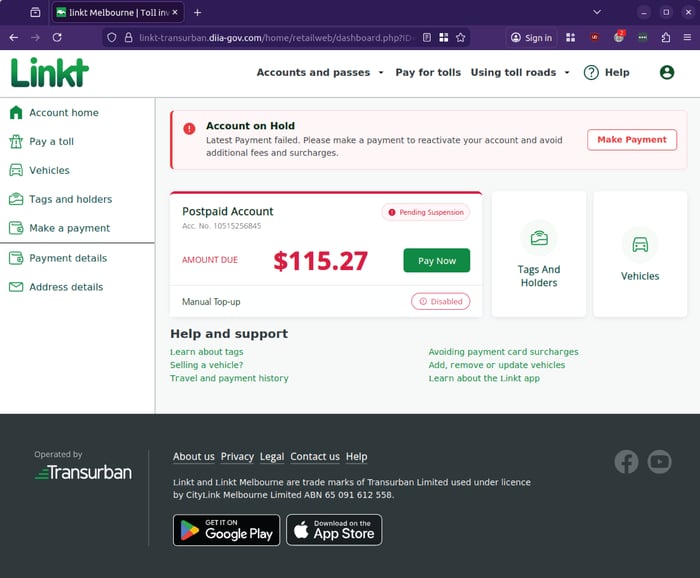
Step 2. Fake Payment Dashboard
Users are redirected to a page showing a $115.27 balance due, claiming the account is on hold. Only the “Pay Now” button works; all other links are inactive.
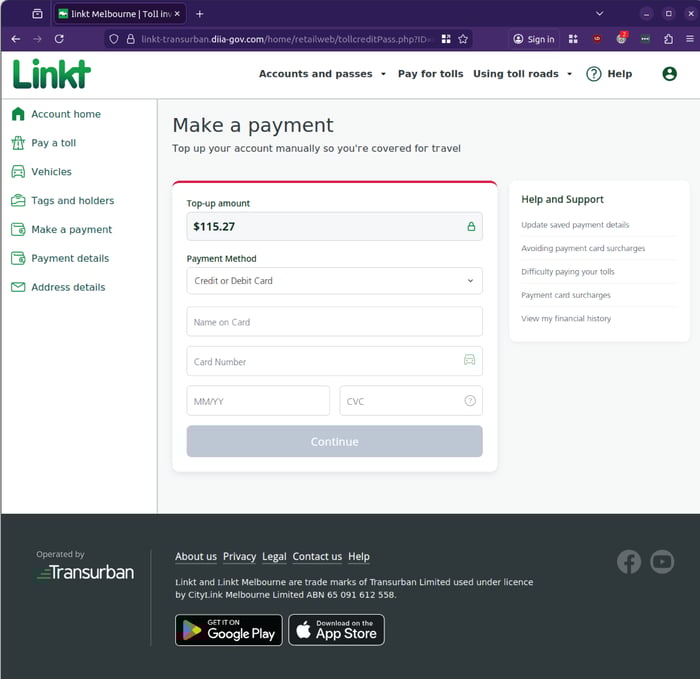
Users are then asked to enter their full credit card details, including card number, expiry, and CVC.
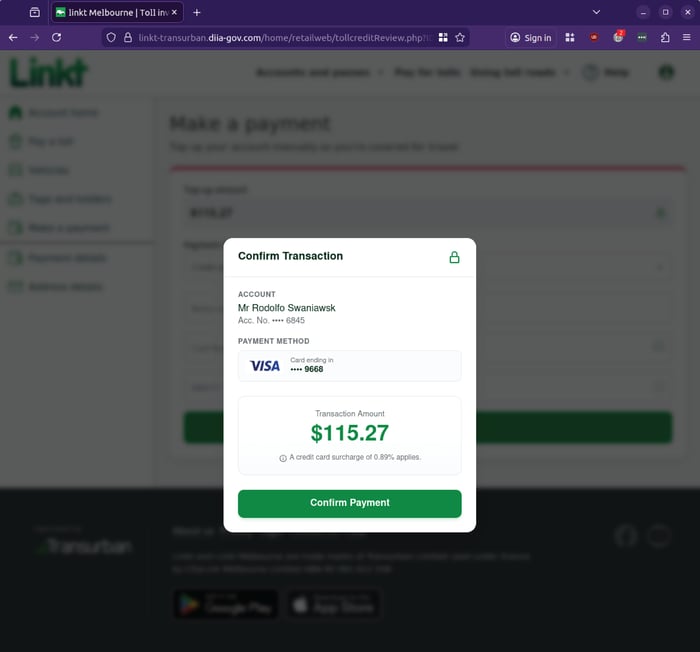
Once submitted, a confirmation popup appears, falsely displaying the name, masked card number, and amount.
Step 5. Authentication Error
The process ends in an error claiming “Payment authentication failed”, likely to prevent suspicion while the credentials are exfiltrated.

Why This Matters
This phishing attack uses several sophisticated social engineering techniques:
- Highly realistic branding, layout, and URL spoofing
- Emotional pressure through suspension warnings and overdue payment notices
- A multi-step interaction flow that increases trust and information capture
This scam is particularly effective against time-poor recipients and employees who may click without verifying authenticity.
Stay Safe, Know the Signs
MailGuard advises all recipients of these emails to delete them immediately without clicking on any links. Responding or providing personal details can lead to identity theft, data breaches, and financial losses.
Avoid emails that:
- Aren’t addressed to you personally.
- Are unexpected and urge immediate action.
- Contain poor grammar or miss crucial identifying details.
- Direct you to a suspicious URL that isn’t associated with the genuine company.
Many businesses turn to MailGuard after a near miss or incident. Don't wait until it's too late. Reach out to our team for a confidential discussion by emailing expert@mailguard.com.au or calling 1300 30 44 30.
One Email Is All That It Takes
All that it takes to devastate your business is a cleverly worded email message that can steal sensitive user credentials or disrupt your business operations. If scammers can trick one person in your company into clicking on a malicious link or attachment, they can gain access to your data or inflict damage on your business.
For a few dollars per staff member per month, you can protect your business with MailGuard's specialist AI-powered, zero-day email security. Special Ops for when speed matters! Our real-time zero-day, email threat detection amplifies our client’s intelligence, knowledge, security and defence. Talk to a solution consultant at MailGuard today about securing your company's inboxes.
Stay up-to-date with MailGuard's latest blog posts by subscribing to free updates. Subscribe to weekly updates by clicking on the button below.