A new phishing campaign is impersonating SendGrid Support, targeting organizations with fraudulent account notifications designed to steal login credentials from unsuspecting users. The email claims that messages sent through the recipient's SendGrid environment are being rejected due to insufficient account permissions. Recipients are urged to review their account settings and click a button labelled "Open Dashboard" to restore email functionality. While the email appears to be a legitimate service notification, it is in fact a credential harvesting attack designed to capture usernames and passwords.
How The Scam Works
The phishing email uses SendGrid branding and a convincing support-themed message to create a sense of urgency. The email advises recipients that messages sent through the SendGrid API are no longer being delivered because their account lacks the required permissions. Victims are instructed to click a prominent "Open Dashboard" button to resolve the issue.
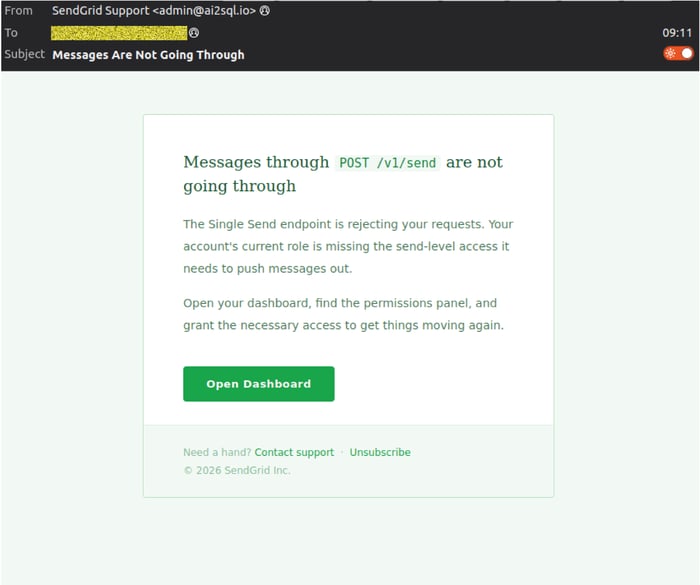
Example phishing content shown using SendGrid branding. Not affiliated with SendGrid.
Recipients who click the link are redirected to a phishing website hosted on a recently registered domain, personalsglogin[.]com. The phishing page closely resembles a legitimate SendGrid login portal and requests the victim's username and password.
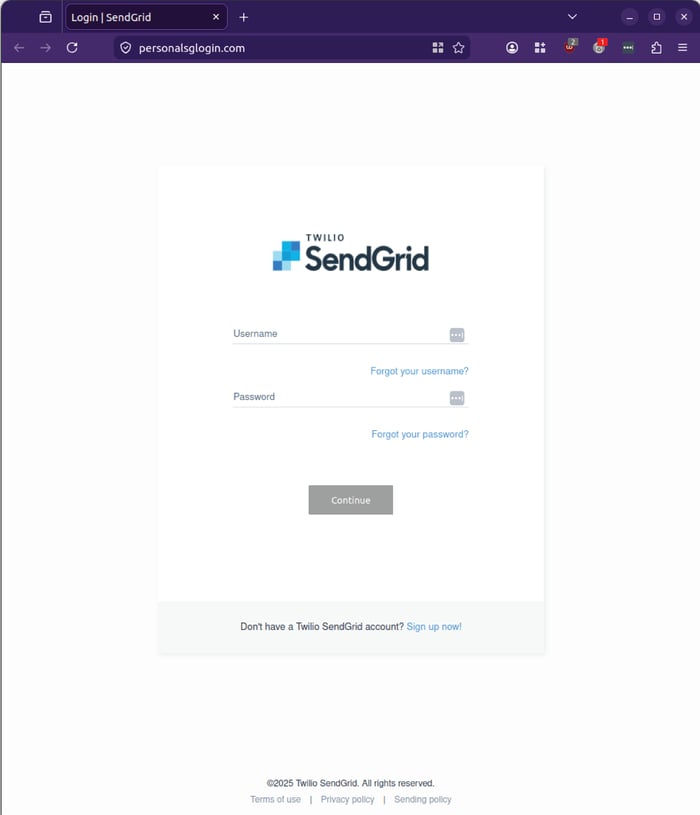 Example phishing content shown using SendGrid branding. Not affiliated with SendGrid.
MailGuard observed that the phishing site initially accepts credentials before displaying an error message indicating the details provided are incorrect. This technique is commonly used to encourage victims to re-enter their credentials, increasing the likelihood that genuine login information will be submitted.
Why This Attack Is Concerning
Unlike many phishing campaigns that originate from newly created or obviously suspicious infrastructure, this attack appears to have been distributed through a compromised SendGrid account. The messages were sent using legitimate email delivery infrastructure, helping them appear authentic and increasing the likelihood that recipients may trust the communication.
-
The display name used in the attack was: SendGrid Support
-
The messages originated from: admin(at)ai2sql(dot)io
-
Each message used a unique sending address, a tactic often employed to improve deliverability and make detection more difficult. These individualized sender addresses can make the messages appear more legitimate and may help them bypass traditional reputation-based filtering controls.
What Recipients Should Watch For
Several indicators suggest this email is malicious:
-
Unexpected notifications regarding email delivery problems.
-
Requests to urgently review account permissions.
-
Links directing users to domains unrelated to SendGrid.
-
Login pages hosted on newly registered domains.
-
Requests for usernames and passwords outside of normal authentication workflows.
Organisations that rely on cloud-based communications platforms should remain cautious when receiving account-related emails, even when they appear to originate from trusted providers. Cybercriminals increasingly exploit trust in established brands and services because recipients are more likely to respond quickly when they believe a business-critical system may be experiencing problems.
Stay Safe, Know the Signs
MailGuard advises all recipients of these emails to delete them immediately without clicking on any links. Responding or providing personal details can lead to identity theft, data breaches, and financial losses.
Avoid emails that:
- Aren’t addressed to you personally.
- Are unexpected and urge immediate action.
- Contain poor grammar or miss crucial identifying details.
- Direct you to a suspicious URL that isn’t associated with the genuine company.
Many businesses turn to MailGuard after a near miss or incident. Don't wait until it's too late. Reach out to our team for a confidential discussion by emailing expert@mailguard.com.au or calling 1300 30 44 30.
One Email Is All That It Takes
All that it takes to devastate your business is a cleverly worded email message that can steal sensitive user credentials or disrupt your business operations. If scammers can trick one person in your company into clicking on a malicious link or attachment, they can gain access to your data or inflict damage on your business.
For a few dollars per staff member per month, you can protect your business with MailGuard's specialist AI-powered, zero-day email security. Special Ops for when speed matters! Our real-time zero-day, email threat detection amplifies our client’s intelligence, knowledge, security and defence. Talk to a solution consultant at MailGuard today about securing your company's inboxes.
Stay up-to-date with MailGuard's latest blog posts by subscribing to free updates. Subscribe to weekly updates by clicking on the button below.