Business Email Compromise (BEC) is no longer a niche cybersecurity concern. It has become one of the most financially damaging cyber threats facing organisations worldwide. According to the FBI's latest Internet Crime Complaint Center (IC3) report, BEC was responsible for more than US$3.05 billion in reported losses and nearly 25,000 incidents in a single year.
Yet despite those staggering numbers, many organisations continue to focus their email security strategies primarily on malware, ransomware, and malicious links.
The challenge is that many modern BEC attacks contain none of those indicators.
No malware.
No malicious attachment.
No suspicious URL.
Just a carefully crafted message designed to exploit trust.
For MailGuard partners, this represents both a significant customer risk and an important advisory opportunity.
The Threat That Doesn't Look Like a Threat
Traditional cyberattacks often rely on technical compromise. Attackers deliver malware, exploit vulnerabilities, or attempt to gain unauthorised access to systems.
BEC works differently. Instead of targeting technology, it targets human decision-making.
A finance manager receives an urgent payment request appearing to come from the CFO.
A payroll officer receives instructions to update banking details.
A procurement team member receives an email from what appears to be a trusted supplier requesting payment to a new account.
Everything looks legitimate, the language is professional, the sender appears familiar, and the request seems reasonable. By the time someone realises the communication was fraudulent, the funds may already be gone.
As the report explains, some of today's most financially damaging attacks are designed specifically to exploit trust rather than technology.
AI Is Accelerating the Problem
Artificial Intelligence is making these attacks even more effective.
Historically, successful social engineering campaigns required significant research and preparation. Attackers needed to understand organisational structures, business relationships, writing styles, and communication patterns.
Today, AI dramatically reduces that effort. The FBI has warned that AI enables cybercriminals to create convincing synthetic content, personalised conversations, and executive-style communications at scale. Messages that once contained obvious spelling mistakes or awkward phrasing can now appear polished, professional, and highly convincing.
The result is a growing category of attacks that are becoming increasingly difficult for employees to identify.
For customers, this means traditional awareness cues are becoming less reliable.
For partners, it means the conversation needs to evolve beyond simply blocking malware.
Why Traditional Detection Isn't Always Enough
Many email security technologies were originally designed to identify technical indicators of compromise. They analyse attachments, inspect links, and compare content against known threat intelligence. These capabilities remain critical. However, BEC often avoids those indicators entirely.
As highlighted in the report, the challenge is no longer simply identifying malicious code. The challenge is identifying deception. Attackers increasingly use legitimate services, trusted brands, realistic business language, and carefully crafted impersonation techniques to bypass traditional controls.
This shift requires a different approach to threat detection, one capable of analysing behaviour, intent, context, impersonation indicators, and communication patterns rather than relying solely on malicious payloads.
The Opportunity for MSPs
Many customers still think about email security through a technical lens.
They ask:
- Are we blocking malware?
- Are we stopping spam?
- Are malicious links being detected?
Increasingly, the more important question may be:
"Can we identify a fraudulent communication that appears completely legitimate?"
This creates an opportunity for partners to help customers understand how communication-based attacks have evolved.
The conversation should move beyond inbox protection and toward business protection.
After all, BEC doesn't just create cybersecurity incidents.
It creates financial losses.
It disrupts operations.
It damages supplier relationships.
It undermines trust.
These are business risks, not simply technology risks.
Questions Every Customer Should Be Asking
The report highlights several questions leaders and boards should be considering:
- If an attacker impersonated our CFO right now, would we detect it before it reached the inbox?
- How many credential theft attempts are actually reaching employees each month?
- Are we relying solely on native protections and post-delivery remediation?
- Have we reviewed recent threat activity targeting our organisation?
These are valuable discussion starters for account reviews, security assessments, executive briefings, and board-level conversations.
New Executive Report Available
To help partners educate customers on this growing threat, MailGuard has released a new executive briefing:
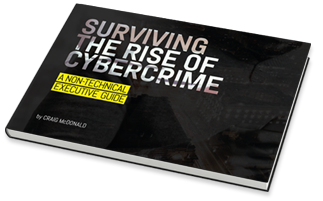
Harnessing AI Against BEC: The $3B Threat to Business
The report explores:
- Why BEC remains one of the most financially damaging forms of cybercrime
- How AI is increasing the sophistication and scale of trust-based attacks
- Why many BEC attacks evade traditional email security controls
- The role communication trust plays in modern business operations
- How organisations can reduce the risk of payment fraud, credential theft, executive impersonation, and supplier fraud
The report also examines how organisations can better protect trusted communications before attackers have an opportunity to exploit them.
Download the Report
We encourage all MailGuard partners to download and review the report, then share it with customers, prospects, and executive stakeholders.
As AI continues to accelerate business communications, protecting trust may become one of the most important cybersecurity challenges organisations face.
Download your copy of Harnessing AI Against BEC: The $3B Threat to Business and start the conversation with your customers today.
Keeping Businesses Safe and Secure
Prevention is always better than a cure, and one of the best defences is to encourage businesses to proactively boost their company’s cyber resilience levels to avoid threats landing in inboxes in the first place. The fact that a staggering 94% of malware attacks are delivered by email, makes email an extremely important vector for businesses to fortify.
No one vendor can stop all email threats, so it’s crucial to remind customers that if they are using Microsoft 365 or Google Workspace, they should also have a third-party email security specialist in place to mitigate their risk. For example, using a specialist AI-powered email threat detection solution like MailGuard.
For a few dollars per staff member per month, businesses are protected by MailGuard's specialist, AI-powered zero-day email security. Special Ops for when speed matters! Our real-time zero-day, email threat detection amplifies your client’s intelligence, knowledge, security and defence.
MailGuard provides a range of solutions to keep businesses safe, from email filtering to email continuity and archiving solutions. Speak to your clients today to ensure they’re prepared and get in touch with our team to discuss fortifying your client’s cyber resilience.
Talk to us
MailGuard's partner blog is a forum to share information; we want it to be a dialogue. Reach out to us and tell us what your customers need so we can serve you better. You can connect with us on social media or call us and speak to one of our consultants.
Australian partners, please call us on 1300 30 65 10
US partners call 1888 848 2822
UK partners call 0 800 404 8993